You know I just love this job for the variety.
I'm a newspaper photographer; photojournalist if you will. Many assignments we do can be routine or mundane, while others can be life altering.
I don't travel as much as I'd like perhaps, but just about as much as my family life can afford, and certainly more than some of my colleagues. I've been fortunate to have had many opportunities, and I've tried to make the best of them.
I'm not in Egypt right now, and yes, I'm somewhat disappointed about that. But since I'm not I try to please my masters here in Toronto with the best job I possibly can.
My job, over the past 24 hours, has included shooting Wynton Marsalis with the Lincoln Center Jazz Orchestra at Massey Hall, a frustrating effort over the span of two songs, in poor light while Mr. Marsalis himself, practically hid at the back of the 15-piece band! My favorite pic from the night was taken from the front seat of my car however, while waiting to meet the PR guy at the stage door.
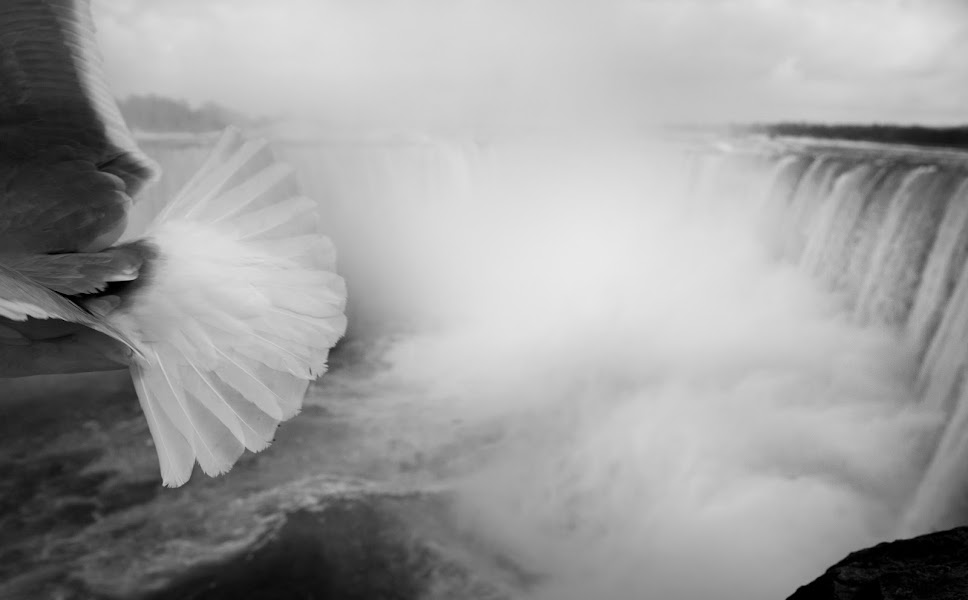
Today, during my 3pm shift, I was shooting Pee Wee hockey, trying to get a good body checking photo for yet another study on the impact of body checking on minor hockey players. Seems body checking is like wine....good for you one year, ....not so much the next. I love hockey. But Pee Wee hockey doesn't always provide the best hit-action. Anyway, it was a snow day here, so before the first game I thought I try and catch up with the rest of the staff and find a weather pic, so off to a few tried and true feature holes, and lo and behold.....I got lucky.
Like I said, I love this job for the variety.
Showing posts with label power. Show all posts
Wednesday, 2 February 2011
Pix between assignments
Labels:
assignments,
canada,
night,
photography,
power,
snow,
surf
Monday, 17 January 2011
A "Classic" non-assignment
It's rare for our photo staff at The Globe and Mail to shoot sports action. The exception was the Winter Olympics in Vancouver which we had four staff photographers assigned to.
Although this wasn't an assignment, I did spend some time recently shooting hockey. The story and photographs appeared over two pages in The Globe and Mail on Monday, Jan. 17, 2011, as well as on the website.
I've been interested in photographing Mennonites for many years, but I've been waiting for a reason to do so. A short time ago, while watching the NHL's Winter Classic I got to thinking that other than the game being outside there really wasn't much "classic" about the game.
So where do you find hockey played in a true classic fashion, the way it might have been played in it's genesis? The answer, I discovered, is among people who choose to live a simpler life - the Mennonites.
I was able to get an "in" to meet with some members of the community in north Waterloo region, but I was fearful that my efforts to make images would be fruitless. The group I was sent to meet are some of the most strict of the Old Order - the David Martin Mennonites. My instructions from my Mennonite friend were to introduce myself, explain why I was there (the story I wanted to tell), and ask questions as I would anyone else I'd just met. But NEVER could I ask to photograph them. Due to their faith they are obligated to say no to photographs, and that would have been the end of that. Despite this they have, on occasion, been photographed in the past, so I was optimistic that I could work within their comfort level.
My hope was that they would allow me to spend time with them, and gradually I would begin to make photographs. The approach worked like a charm, although I felt as if every image I made would be my last of them. It became a game of sorts, with the boys tolerating my presence, my questions, and seemingly my camera, as long as I remained subtle. It wasn't easy to make photographs because it was difficult to bring the viewfinder up too long to study the subject and wait for moments. I only had one young man give me a sideways look while I pointed the lens at him, but I stopped and he carries on as if nothing had happened.
It was great shooting these boys playing a game I have always loved. The experience of being around them playing a game simply for the pleasure of it is one I'll not soon forget. Just before the game ended, I was sitting on one of the chairs, at the end of the "bench" so to speak, when one of the boys leaned out and spoke in my direction. "Did you get any good shots," he asked, with a smile on his face. I could only smile as I answered with a nod, and the words "I think so," which was as honest as I could possibly be.
The images have also been posted in a gallery at peterpower.ca.
Although this wasn't an assignment, I did spend some time recently shooting hockey. The story and photographs appeared over two pages in The Globe and Mail on Monday, Jan. 17, 2011, as well as on the website.
I've been interested in photographing Mennonites for many years, but I've been waiting for a reason to do so. A short time ago, while watching the NHL's Winter Classic I got to thinking that other than the game being outside there really wasn't much "classic" about the game.
So where do you find hockey played in a true classic fashion, the way it might have been played in it's genesis? The answer, I discovered, is among people who choose to live a simpler life - the Mennonites.
I was able to get an "in" to meet with some members of the community in north Waterloo region, but I was fearful that my efforts to make images would be fruitless. The group I was sent to meet are some of the most strict of the Old Order - the David Martin Mennonites. My instructions from my Mennonite friend were to introduce myself, explain why I was there (the story I wanted to tell), and ask questions as I would anyone else I'd just met. But NEVER could I ask to photograph them. Due to their faith they are obligated to say no to photographs, and that would have been the end of that. Despite this they have, on occasion, been photographed in the past, so I was optimistic that I could work within their comfort level.
My hope was that they would allow me to spend time with them, and gradually I would begin to make photographs. The approach worked like a charm, although I felt as if every image I made would be my last of them. It became a game of sorts, with the boys tolerating my presence, my questions, and seemingly my camera, as long as I remained subtle. It wasn't easy to make photographs because it was difficult to bring the viewfinder up too long to study the subject and wait for moments. I only had one young man give me a sideways look while I pointed the lens at him, but I stopped and he carries on as if nothing had happened.
It was great shooting these boys playing a game I have always loved. The experience of being around them playing a game simply for the pleasure of it is one I'll not soon forget. Just before the game ended, I was sitting on one of the chairs, at the end of the "bench" so to speak, when one of the boys leaned out and spoke in my direction. "Did you get any good shots," he asked, with a smile on his face. I could only smile as I answered with a nod, and the words "I think so," which was as honest as I could possibly be.
The images have also been posted in a gallery at peterpower.ca.
Labels:
canada,
classic,
hockey,
layout,
martin,
mennonites,
photojournalism,
power,
sports,
tradition
Sunday, 9 January 2011
Street Photography - Invisibility
Just to further the subject of street photography....thanks to the folks at duckrabbit for posting this video link with street photographer Matt Stuart.
His quote, "Invisibility would be my superpower," is excellent, but I think the key thing to learn here is the way he carries himself while photographing. His demeanour is unthreatening because he is confident that he is doing nothing wrong, and certainly no harm to anyone. I agree completely that people sense whether you can be trusted or not, and you have to project that they have nothing to fear from you.
I see so many young photographers trying to work, while being almost frozen with fear that someone might ask them what they are doing? Why are they photographing them? If you know in your heart that individuals have nothing to fear from what you are doing, it really isn't too difficult to explain yourself in a unthreatening manner.
I also can relate completely to his words about being among people on the street and sharing a moment with them, without them ever realizing it. We are very privileged in what we do because of all of the moments we get to experience - all of the emotions, both good and bad.
His quote, "Invisibility would be my superpower," is excellent, but I think the key thing to learn here is the way he carries himself while photographing. His demeanour is unthreatening because he is confident that he is doing nothing wrong, and certainly no harm to anyone. I agree completely that people sense whether you can be trusted or not, and you have to project that they have nothing to fear from you.
I see so many young photographers trying to work, while being almost frozen with fear that someone might ask them what they are doing? Why are they photographing them? If you know in your heart that individuals have nothing to fear from what you are doing, it really isn't too difficult to explain yourself in a unthreatening manner.
I also can relate completely to his words about being among people on the street and sharing a moment with them, without them ever realizing it. We are very privileged in what we do because of all of the moments we get to experience - all of the emotions, both good and bad.
Labels:
approach,
invisibility,
photography,
power,
street,
stuart
Tuesday, 4 January 2011
Street Photography-The Dance
I was just looking at a post by Rob Skeoch on the NPAC site that I found interesting about a documentary that has been done on street photographer Joel Meyerowitz. The video is shot by Cheryl Dunn and is part of documentary called "Everybody Street." The piece is here on the site of The New Yorker.com.
Two things that he mentions even in this short teaser struck a chord with me - things that I have tried to explain to people myself over the years.
The first is the way he speaks about moving with people in the street, even referring to Robert Frank being "balletic."
I've often described moving with people I'm photographing almost as if you are dancing with them, or around them. This helps me become a part of the flow of the situation, and somehow less intrusive. There are times when you want to stand back and remain apart from a moment, but more often than not, especially on the street, it is extremely productive to immerse yourself in the "flow" of what you are photographing.
This leads to the next point that Meyerowitz mentions which is the sensibility of the photographer. This is not just a sensibility of the people living life around you, but a sensibility for the energy, the life, the moments that are intertwining all about you.
In a related piece Mary Ellen Mark speaks about the subject "showing you what the picture is." Street photography, as challenging as it might be, is not about concepts, but about watching life. She goes on to speak about it being an advantage to be a woman because she is less threatening than a man, which, for the most part, I agree with, but as with any generalization, it doesn't hold true to all individuals. How threatening you are depends largely on your own personality and your approach to people.
Two things that he mentions even in this short teaser struck a chord with me - things that I have tried to explain to people myself over the years.
The first is the way he speaks about moving with people in the street, even referring to Robert Frank being "balletic."
I've often described moving with people I'm photographing almost as if you are dancing with them, or around them. This helps me become a part of the flow of the situation, and somehow less intrusive. There are times when you want to stand back and remain apart from a moment, but more often than not, especially on the street, it is extremely productive to immerse yourself in the "flow" of what you are photographing.
This leads to the next point that Meyerowitz mentions which is the sensibility of the photographer. This is not just a sensibility of the people living life around you, but a sensibility for the energy, the life, the moments that are intertwining all about you.
In a related piece Mary Ellen Mark speaks about the subject "showing you what the picture is." Street photography, as challenging as it might be, is not about concepts, but about watching life. She goes on to speak about it being an advantage to be a woman because she is less threatening than a man, which, for the most part, I agree with, but as with any generalization, it doesn't hold true to all individuals. How threatening you are depends largely on your own personality and your approach to people.
![]() |
| A Yorkville, Toronto bicyclist sends pigeons scattering. (Photo by Peter Power) |
Labels:
canada,
library,
mark,
meyerowitz,
photography,
power,
skeoch,
street photography,
toronto,
yorkville
Wednesday, 29 December 2010
Looking Back at 2010
It has been quite a year 2010. There were plenty of stories that have touched us all in different ways, images that we'll never forget, and likely personal moments that test or reward us.
I cherish my time with my family, especially around Christmas. It's a time to reconnect, especially with my two teenagers, and recharge the batteries so to speak for the challenges that the New Year will bring.
As far as work is concerned it has been relatively busy, at least for a daily newspaper photographer working in Canada. Below is a collection of twelve images - one, unpublished photograph from each month of the year - a year that had me on the road for about 60 days working on the Haitian earthquake, the Olympics, the Dementia Series, and one other that will be published in February.
There are also more images posted on my website as a 2010 Year in Review slideshow.
I cherish my time with my family, especially around Christmas. It's a time to reconnect, especially with my two teenagers, and recharge the batteries so to speak for the challenges that the New Year will bring.
As far as work is concerned it has been relatively busy, at least for a daily newspaper photographer working in Canada. Below is a collection of twelve images - one, unpublished photograph from each month of the year - a year that had me on the road for about 60 days working on the Haitian earthquake, the Olympics, the Dementia Series, and one other that will be published in February.
There are also more images posted on my website as a 2010 Year in Review slideshow.
![]() |
| A young girl heads home from her father's funeral in Port-au-Prince, Haiti. |
Labels:
2010,
canada,
gallery,
photography,
photojournalism,
power,
review,
toronto,
year
Subscribe to:
Posts (Atom)


